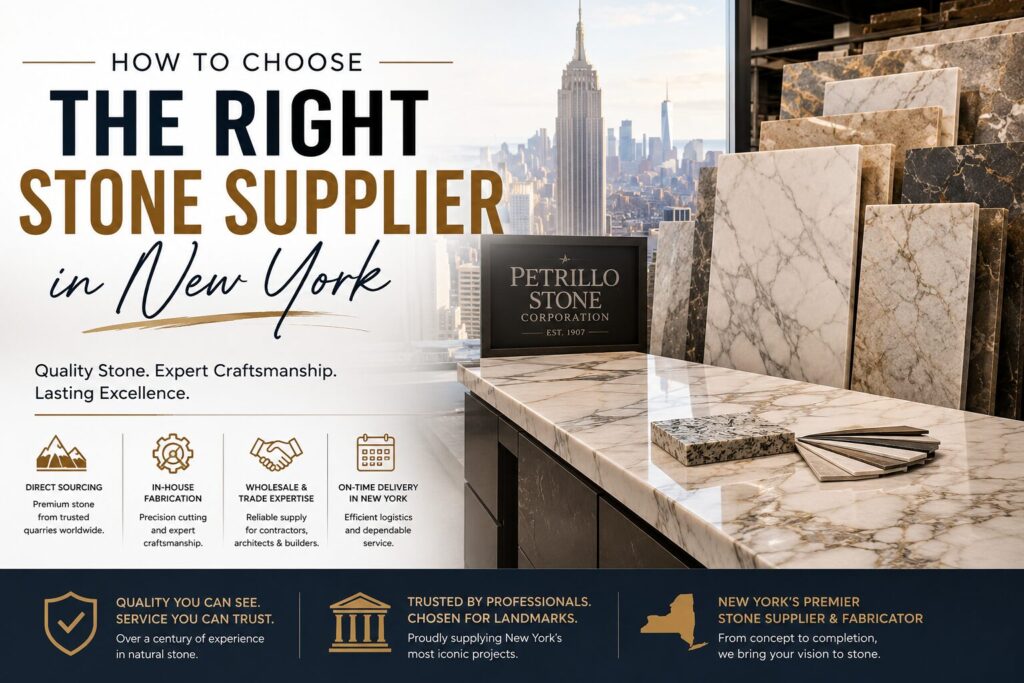
The first mistake buyers make is assuming every stone supplier does the same thing. Some only sell raw material, some only fabricate, and a few do both. Knowing which one you are hiring changes the entire project.
Choosing a stone supplier in New York comes down to understanding those roles, then finding a partner who can carry your project from sourcing through the finished piece. Here is how to make that call.
Supplier vs Fabricator: Why the Difference Matters
A supplier provides the raw stone. A fabricator cuts, shapes, finishes, and installs it. Many companies do only one of the two, which means you end up coordinating between vendors and hoping the handoff goes cleanly.
A stone fabricator and supplier in NY who handles both removes that gap. One team sources the material, controls its quality, and turns it into finished work, with a single point of accountability throughout.
The Advantage of One Roof
When sourcing and fabrication live under one roof, quality is controlled from the moment a slab is selected to the moment it is installed. Nothing gets lost in translation between a material broker and a separate shop.
That integration also protects your timeline. There is no waiting on a third party to deliver, no finger-pointing when a slab arrives flawed, and no gap where responsibility quietly disappears.
What a Strong Stone Supplier Should Offer
Not every supplier is equipped for serious work. A few capabilities separate a dependable partner from a simple stone yard.
Direct Sourcing and Material Range
The best suppliers import directly from quarries across the United States and around the world, rather than reselling whatever is in stock. As a natural stone supplier in NYC, our range is what lets a project hinge on one specific block, color, or vein.
A granite supplier in New York or a marble supplier in NY worth working with can show you full slabs and source rare material on request, not just point at a limited floor selection.
Wholesale and Trade Capability
Volume matters for larger projects and trade buyers. A wholesale stone supplier in New York sources at scale and works directly with architects, contractors, and building professionals who need reliable material and consistent supply.
For trade and bulk needs, the right partner discusses terms openly and plans supply around the demands of the project rather than treating every order as a one-off retail sale.
Consultation and Guidance
Strong suppliers guide the decision instead of just filling an order. That means honest advice on which stone suits your application, your traffic, and your budget before anything is cut.
Good guidance saves money. A supplier who steers you toward the right material for the job, rather than the most expensive slab on the floor, is one worth keeping.
Stone Types a Full-Service Supplier Should Carry
A capable supplier offers a range of materials that most New York projects call for. Marble delivers depth and movement for luxury interiors. Granite offers hardness and weather resistance for kitchens and exteriors.
Limestone provides an understated tone for facades and lobbies, while quartzite pairs marble’s look with far greater durability. Onyx, travertine, and other specialty stones round out the selection for accent and statement work.
Vetting a Supplier: Questions to Ask
A few direct questions reveal whether a supplier can carry your project. Ask where the stone is sourced, whether fabrication happens in-house or is brokered out, and how they handle New York delivery logistics.
Ask to see finished work similar to yours, and request references. Be wary of pricing far below the market, since it usually signals thinner material, outsourced cutting, or a rushed install somewhere down the line.
Custom Work and Homeowners
A full-service supplier serves more than commercial accounts. Homeowners benefit from the same sourcing depth and fabrication skill, applied to kitchens, baths, and feature walls.
Petrillo’s custom stone fabrications for homeowners bring landmark-grade craftsmanship into private residences, with material selected and finished to each project’s specifications.
Cast Stone vs Natural Stone
Part of choosing a supplier is understanding the material options they carry. Cast stone, molded from a stone mixture, is faster and more budget-friendly but limited in detail. Natural stone, quarried and carved, offers unique character and finer detail.
Our guide to cast natural stone breaks down when each option is the smarter choice for a given project.
Why Petrillo Stone
Petrillo Stone Corporation has supplied and fabricated New York stone for over a century, founded in 1907 and still run by the founding family. From its Mount Vernon facility, the company imports material worldwide and fabricates every piece on site.
That combination of direct sourcing and in-house fabrication is exactly what buyers should look for. For architects, contractors, and homeowners, Petrillo offers premier natural stone services in NY, backed by work on landmark buildings across the city.
Frequently Asked Questions
What is the difference between a stone supplier and a stone fabricator in New York?
A supplier provides the raw stone, while a fabricator cuts, shapes, finishes, and installs it. Petrillo does both, which gives you one accountable partner from sourcing through installation.
Does Petrillo Stone handle wholesale orders?
Petrillo sources stone at volume and works directly with architects, contractors, and trade professionals. For wholesale or bulk supply terms, contact the team directly to discuss the specifics of your project.
What types of stone do you supply, such as marble, granite, or limestone?
All three, along with quartzite, onyx, travertine, and other natural stones, are imported directly from quarries across the United States and around the world.
Is there a consultation available before placing a stone order?
Yes. Petrillo works with clients to select the right material and plan the project before any stone is cut. Reach out to arrange a consultation.